Pages

Weak Grip Strength Does not Predict Upper Extremity Musculoskeletal Symptoms or Injuries Among New Workers

Purpose Grip strength is often tested during post-offer pre-placement screening for workers in hand-intensive jobs.

The authors' purpose of this study was to evaluate the association between grip strength and upper extremity symptoms, work disability, and upper extremity musculoskeletal disorders (UE MSDs) in a group of workers newly employed in both high and low hand intensive work.

1,107 recently-hired workers completed physical examinations including grip strength measurements. Repeated surveys obtained over 3 years described the presence of upper extremity symptoms, report of physician-diagnosed musculoskeletal disorders (MSDs), and job titles. Baseline measured grip values were used in analytic models as continuous and categorized values to predict upper extremity symptoms, work disability, or UE MSD diagnosis.

Results Twenty-six percent of males and 20 % of females had low baseline hand strength compared to normative data. Multivariate logistic regression analyses showed no consistent associations between grip strength and three health outcomes (UE symptoms, work disability, and MSDs) in this young cohort (mean age 30 years). Past MSD and work type were significant predictors of these outcomes.

Conclusions Physical hand strength testing was not useful for identifying workers at risk for developing UE MSDs, and may be an inappropriate measure for post-offer job screens.

Dale AM, Addison L, Lester J, Kaskutas V, Evanoff B. Weak Grip Strength Does not Predict Upper Extremity Musculoskeletal Symptoms or Injuries Among New Workers. J Occup Rehabil 2014 06;24(2):325-31. 

Somatic dysfunction and fascia’s gliding potential


Somatic dysfunction is defined as “impaired or altered function of related components of the somatic (body framework) system: skeletal, arthrodial, and myofascial structures, and related vascular, lymphatic, and neural elements.” (Ward, 2003).

The osteopathic model of somatic dysfunction, that attempts to make sense of such a finding, has been summarized by the acronym STAR (Dowling, 1998).

This includes:
“S” =  sensitivity (abnormal tenderness)
“T” =  tissue texture change such as altered tone, laxity etc.
“A” =  asymmetry (malalignment)
“R” =  range of motion and pliability reduction (e.g. contracture)

The STAR designation offers no diagnosis - only an observation that all may not be well in the tissues being evaluated, demanding further investigation as to causal, aggravating and maintaining features  whether local, global or distant.

Sliding, gliding functions as part of the “R” feature of somatic function and dysfunction!

Chaitow L. Somatic dysfunction and fascia's gliding-potential. J Bodywork Movement Ther 2014 01;18(1):1-3.

Effect of therapeutic infra-red in patients with non-specific low back pain

The authors objective with this study was to investigate the effect of superficial heat by infra-red (IR) in patients with chronic non-specific low back pain (NSLBP).

Ten patients with NSLBP (5 men and 5 women) and disease duration of 21.7 11.50 months participated in this pilot study. Patients had a mean age of 36.40 10.11 years (range Z 25e55). Patients were treated with infra-red (IR) for 10 sessions, each for 15 min, 3 days per week, for a period of 4 weeks.

Outcome measures were the Numerical Rating Scale (NRS), the Functional Rating Index (FRI), the Modified eModified Schober Test (MMST), and the Biering-Sorensen test to assess pain severity, disability, lumbar flexion and extension range of motion (ROM), and back extensor endurance, respectively.

Data were collected at: baseline - study entry (T0); end of 5th treatment session after 2 weeks (T1); and end of the treatment after 4 weeks (T2). The results of the ANOVA demonstrated a statistically significant main effect of IR on all outcomes of pain, function, lumbar flexion-extension ROM, and back extensor endurance.

The treatment effect sizes ranged from large to small. IR was effective in improving pain, function, lumbar ROM, and back extensor endurance in a sample of patients with NSLBP. Treatment effect sizes ranged from large to small indicating clinically relevant improvements primarily in pain and function for patients with NSLBP.

Ansari NN, Naghdi S, Naseri N, Entezary E, Irani S, Jalaie S, et al. Effect of therapeutic infra-red in patients with non-specific low back pain: a pilot study. J Bodywork Movement Ther 2014 01;18(1):75-81. 

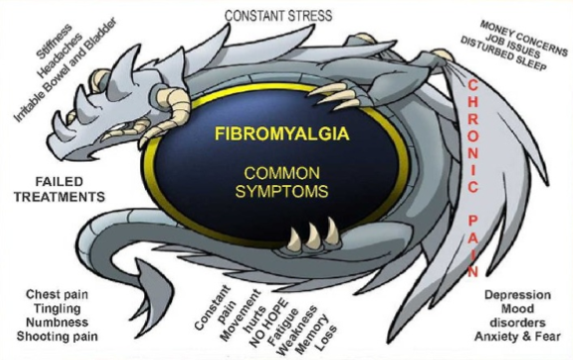
Including a range of outcome targets offers a broader view of fibromyalgia treatment outcome: results from a retrospective review of multidisciplinary treatment.


Fibromyalgia is associated with substantial functional disability. Current drug and non-drug treatments result in statistically significant but numerically small improvements in typical numeric measures of pain severity and fibromyalgia impact.

The authors aim with this study was to evaluate additional measures of pain severity and functional outcome that might be affected by fibromyalgia treatment. This retrospective review evaluated outcomes from 274 adults with fibromyalgia who participated in a six-week, multidisciplinary treatment programme.

Pain and function were evaluated on the first and final treatment visit. Pain was evaluated using an 11-point numerical scale to determine clinically meaningful pain reduction (decrease ≥ 2 points) and from a pain drawing. Function was evaluated by measuring active range of motion (ROM), walking distance and speed, upper extremity exercise repetitions, and self-reports of daily activities.
Numerical rating scores for pain decreased by 10-13% (p < 0.01) and Fibromyalgia Impact Questionnaire (FIQ) scores decreased by 20% (p < 0.001). More substantial improvements were noted when using alternative measures. Clinically meaningful pain relief was achieved by 37% of patients, and the body area affected by pain decreased by 31%. ROM showed significant improvements in straight leg raise and cervical motion, without improvements in lumbar ROM. Daily walking distance increased fourfold and arm exercise repetitions doubled. Despite modest albeit statistically significant improvements in standard measures of pain severity and the FIQ, more substantial pain improvement was noted when utilizing alternative measures of pain and functional improvement.

Alternative symptom assessment measures might be important outcome measures to include in drug and non-drug studies to better understand fibromyalgia treatment effectiveness.

Marcus DA, Bernstein CD, Haq A, Breuer P. Including a range of outcome targets offers a broader view of fibromyalgia treatment outcome: results from a retrospective review of multidisciplinary treatment. Musculoskeletal care 2014 06;12(2):74-81. 

The Impact of Persistent Pain on Working Memory and Learning

The authors by this study reviewed the evidence that persistent pain has the capacity to interrupt and consume working memory resources.

It was argued that individuals with persistent pain essentially operate within a compromised neurocognitive paradigm of limited working memory resources that impairs task performance.

Using cognitive load theory as a theoretical framework, the study investigated if multimedia materials could be used to support individuals with persistent pain. A 2×2 design was used where the first factor was the pain status of the participant (absence vs. presence for more than 6 months), and the second was instructional strategy (written + illustrations vs. written). Fifty-eight full-time teachers from two schools in New South Wales (Australia) were randomly assigned to an instructional strategy to learn about lightning formation.

Participants that identified as experiencing pain for 6 or more months demonstrated clinically low levels of pain, but nevertheless performed significantly worse than pain-free participants on retention and transfer tests. For both pain and pain-free participants, there was a significant benefit in learning from multimedia instruction compared to a written text only strategy.

Smith A, Ayres P. The Impact of Persistent Pain on Working Memory and Learning. Educational Psychology Review 2014 06;26(2):245-264. 

Short- and long-term changes in perceived work ability after interdisciplinary rehabilitation of chronic musculoskeletal disorders.

The authors objective with this study was to  investigate the changes in rehabilitants' perceived work ability after rehabilitation for chronic musculoskeletal disorders with respect to the baseline characteristics.

The study design followed it prospective cohort study based on register and repeated survey data.  Public sector employees in ten towns and five hospital districts were taken in the study.  A total of 854 employees who participated in the rehabilitation programme owing to common chronic musculoskeletal disorders between 1997 and 2009.

Interdisciplinary, biopsychosocial, inpatient rehabilitation programme targeting people of working age with common chronic musculoskeletal disorders. The programme was executed in different rehabilitation centres across the country and funded by the Social Insurance Institution of Finland.

Differences in perceived work ability level before and after rehabilitation was taken. Data were derived from repeated surveys on average 2.1 years before rehabilitation, and 1.5 years (short-term follow-up) and 6.0 years (long-term follow-up) after rehabilitation.

RESULTS: Before the rehabilitation, perceived work ability was 7.13 (SD 1.84) among the rehabilitants and 7.27 (SD 1.72) in the matched reference population. Among rehabilitants, this figure decreased by 0.82 (95% confidence interval -0.98 to -0.67) in the short-term and by 1.26 (95% confidence interval -1.45 to -1.07) in the long-term follow-up. Only slight differences in steepness of this deterioration were observed between subgroups, created based on the participants' baseline characteristics.

Perceived work ability of participants, in an interdisciplinary biopsychosocial rehabilitation programme for common musculoskeletal disorders, deteriorated regardless of any studied pretreatment characteristics. The improvement of work ability may be an unrealistic goal for participants in this type of rehabilitation.

Saltychev M, Laimi K, Pentti J, Kivimäki M, Vahtera J. Short- and long-term changes in perceived work ability after interdisciplinary rehabilitation of chronic musculoskeletal disorders: prospective cohort study among 854 rehabilitants. Clin Rehabil 2014 06;28(6):592-603. 

Impact of the fibromyalgia in the chronic fatigue syndrome

Different studies have showed association of the chronic fatigue syndrome (CFS) with other pathologies, including fibromyalgia (FM).

The author's objective with this study was to analyze whether there are differences in the clinic and in the assessment of fatigue in CFS patients associated or not with FM. A cross-sectional, single-site observational study was undertaken on a consecutive cases of a register of CFS patients at CFS Unit in Vall d'Hebron Hospital, Barcelona, from January 2008 until March 2011. The variables analyzed were FM comorbidity, sleep and fatigue characteristics and cognitive, neurological and autonomic symptoms. Questionnaires of fatigue impact scale, fatigue strength and impact on quality of life SF-36 were evaluated. We included 980 CFS patients (mean age: 48±9 years; 91% women).

Fibromyalgia was present in 528 patients (54%). The level of fatigue (P=.001) and pain (P<.001) was higher in FM patients. Patients with CFS and FM had more prevalence of sleep-related phenomena. The percentage of patients and the degree of severity of cognitive symptoms, neurological and autonomic dysfunction was higher in FM patients (P<.001). FM patients scored higher on the fatigue impact scale (P<.001) and showed worse results in the quality of life questionnaire (P<.001). FM co-morbidity worse clinical parameters, fatigue and the perception of quality of life in CFS patients.

Faro M, Sáez-Francàs N, Castro-Marrero J, Aliste L, Collado A, Alegre J. Impact of the fibromyalgia in the chronic fatigue syndrome]. Medicina clínica 2014 Jun 16;142(12):519-525.